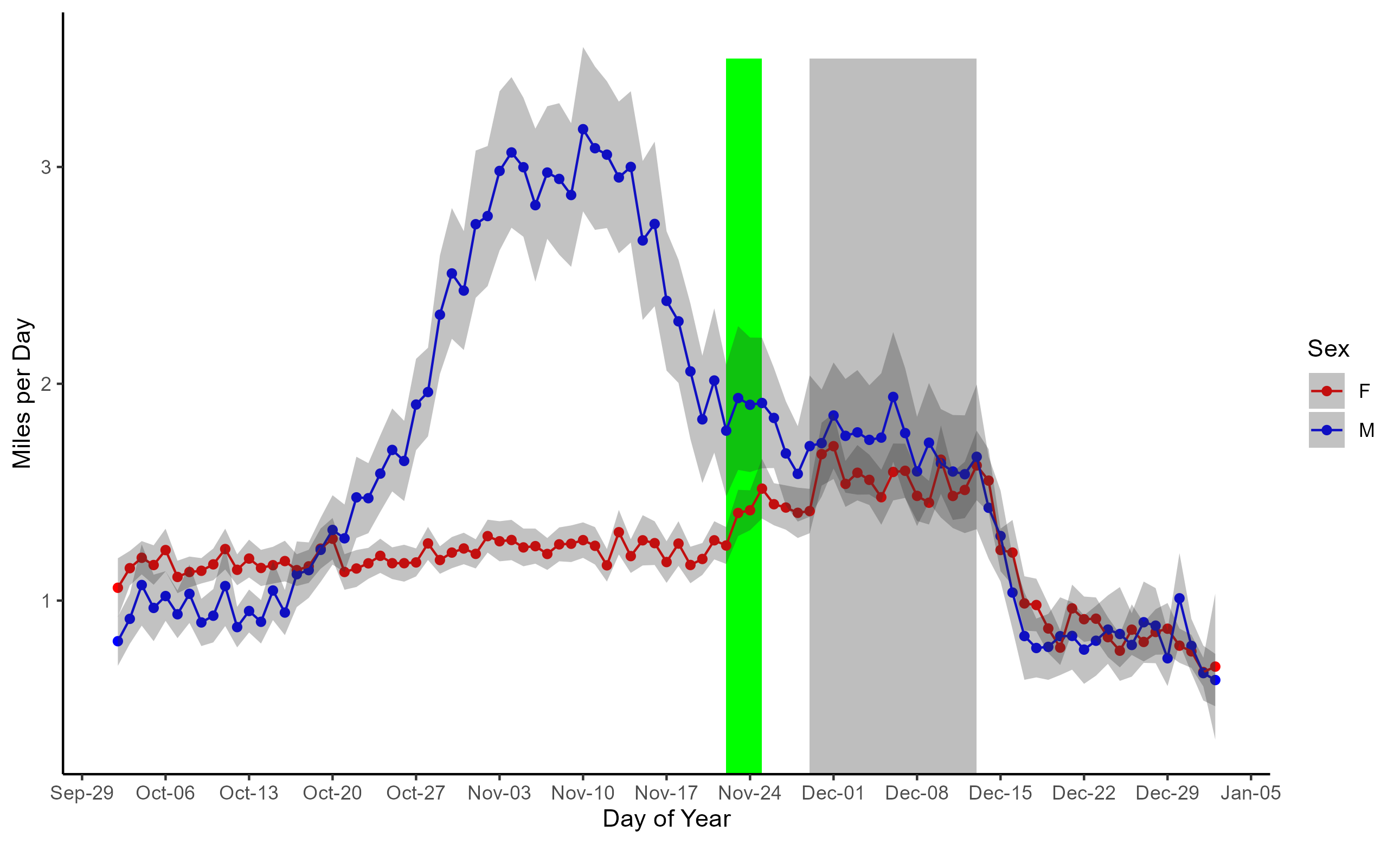
If you are a prey species, you tend to pay attention to the things in your environment that might enjoy you as a snack. If you are a deer, you are paying more than attention. In the last post, I highlighted how bear and deer hunting seasons affect deer movements.
Today I’m going to dive a little deeper. To be honest, I had never given much thought to this until I made that graph last week. Let’s dive deep into my little rabbit hole.
Remember this graph. Bear and deer seasons appear to change the activity of both male and female deer.
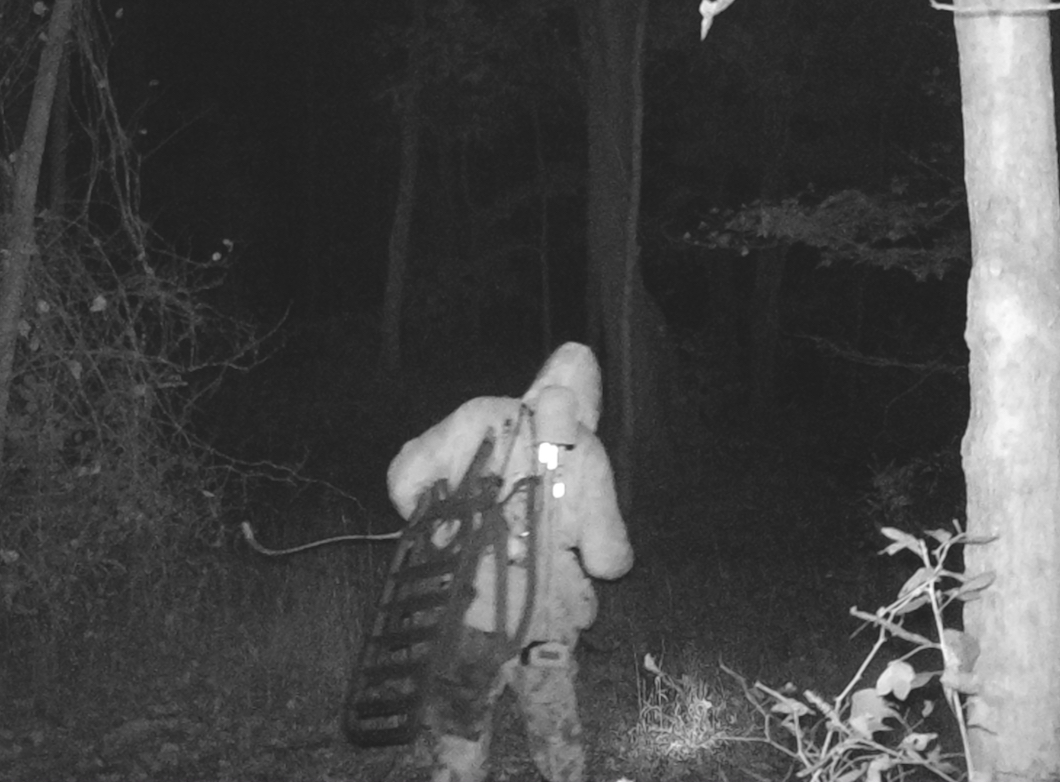
You know that one person at the party that everyone tries to avoid. Brad is just too much – too loud, too depressing, too annoying, too exhausting. Humans are the Brads of the world and every other species is trying to avoid us. At least half of the Earth’s surface has been modified for human activities. Wildlife ecologists have studied the effects of our changes to the environment on animal behavior.
The Deer-Forest Study contributed to a paper published in 2018 in Nature that looked at movements of 803 individual animals across 57 species. It looked at how animal movements differed among environments with varying levels of human modification. In highly modified areas, animals moved one-half to one-third less than in areas with little human modification.
However, we don’t have to modify the environment to influence animal behavior. Simply having Brad in the room can influence the activity of other animals – take hunting seasons in the graph above, for example.
Does that matter to a deer? Let’s look at male movements a little more closely. In the graph below, I speculate that if we didn’t have bear and deer seasons the orange line might represent average daily movement of bucks.

If this were the case, deer are moving more and burning more energy in late November and early December. But how much more?
This is where it gets exciting, for me anyway, because…calculus! The integral of a function represents the area under the curve – in the graph above the area under the blue curve would be the total miles traveled. If we integrate the blue line, we could use that value to represent energy expenditure of male white-tailed deer on our study area (if we are willing to assume miles per day is a good index to energy expended). See below.

If we then integrate the area under the blue line BUT exclude the area we think is due to hunter disturbance, then we get the graph below. Area “B” is the predicted amount of energy expended if hunters were not in the woods.

That means that A divided by B represents how much more energy (in relative terms) deer expended because of disturbance from hunting. In our example, hunter activity caused deer to expend 9.3% more energy from October 1st – December 31st.
That’s nearly 10% more energy! That’s equivalent to Jeannine walking 17,600 steps per day instead of her usual 16,000!
So what about females? Below are the graphs for females. Area A divided by area B indicates females expended 8.4% more energy.


This is just a fun back-of-the-envelope exercise to explore the consequences of human activity on wildlife. The wildlife profession now has the technology to estimate true energy expenditure. We have radio collars that collect accurate locations (latitude, longitude, and elevation) and can measure acceleration in 3 dimensions. We know the basal metabolic rate of deer (the energy required to simply exist in an easy chair), the energy required to maintain body temperature, as well as the energy required to move through snow, and run, and walk.
It won’t be me, but some future PhD will be able to calculate the effect of hunting on the survival and reproductive output of white-tailed deer. If you think this is a silly exercise, tell me that a 10% reduction in gas mileage or a 10% increase in your grocery bill doesn’t matter. Think of how exhausting it is to avoid Brad all night. An 8-10% increase in energy output just before winter is important to deer!
I just can’t tell you how important. But I hope the next generation of biologists will.
-Duane Diefenbach
*If you are a first-time commenter on the blog, your post will not appear until it has been approved by the moderator. This is to prevent spam overwhelming us. If you do not see your post within 24 hours, please email us at deerforeststudy@gmail.com