Do you remember not knowing how to tie your shoes? I don’t. It’s a simple task we all learn and it’s easy to see how this skill applies to our lives. I lace up my shoes every day to walk the dog or go for a run!
How about geometry? Ever sit in geometry class wondering how points, lines, angles, and planes would serve you in the “real world”? I did my time in geometry like everyone else. Once it was behind me, I packed it away in my brain…until I became a quilter 20 years later.
Geometrical concepts are integral to the art of sewing and quilting. And when I stepped into that world, the geometry skills I learned in junior high and high school formed the base of my understanding as I learned how to make pin wheels, half-square triangles, bear’s paws, and basket blocks. I was thrilled that I could understand how patterns worked allowing me to tinker and create my own designs.
Sometimes science is like this. What some perceive as useless knowledge is the seed of groundbreaking discoveries. Recently, I was listening to an episode of Radiolab, one of my favorite podcasts, that illustrated this in a BIG way. It tells the story of scientists searching for life in natural hot springs. It was thought that nothing could live above 163 degrees F because proteins and enzymes just fall apart at those temps.

They set off to Yellowstone National Park with an $80,000 grant from the U.S. Government. They collected samples from Mushroom Pool and [SPOILER] found a new species of bacteria, Thermus aquaticus, which can survive at temperatures of 122-176 degrees F!
Drs. Thomas Brock and Hudson Freeze reported this new species of thermophilic bacteria in 1969. Kind of amazing that life can exist at near boiling!
Cool but does documenting a bacterium that lives in a hot spring really change your life? As a matter of fact, it does. But it took over 20 years to know that. T. aquaticus has become the source of thermostable enzymes that serve as the basis for Polymerase Chain Reaction (PCR)! PCR is fundamental to genetic testing and research including identification of infectious agents. Prenatal testing; cancer screening; HIV, TB, SARS-CoV-2 detection; genetic fingerprinting; DNA sequencing – All thanks to looking for life in a hot spring!
Want more examples of basic science changing the course of medicine, management, and conservation? Check out the Golden Goose Award. This award recognizes government funded, silly sounding research that has made an impact on our society.
Studying the breeding habits of red-cockaded woodpeckers, basic research with no applied goal, lead to a management paradigm shift with measurable results for this endangered species.

Research on the sexual behavior of the screwworm fly which some deemed wasteful federal spending lead to the eradication of this destructive livestock pest saving billions of dollars over the last 50+ years.
So what of deer?
We have studied dispersal behavior of both male and female deer. There are no direct management implications for this research. But knowing helped us understand how and who might spread CWD across the landscape, which has influenced management.
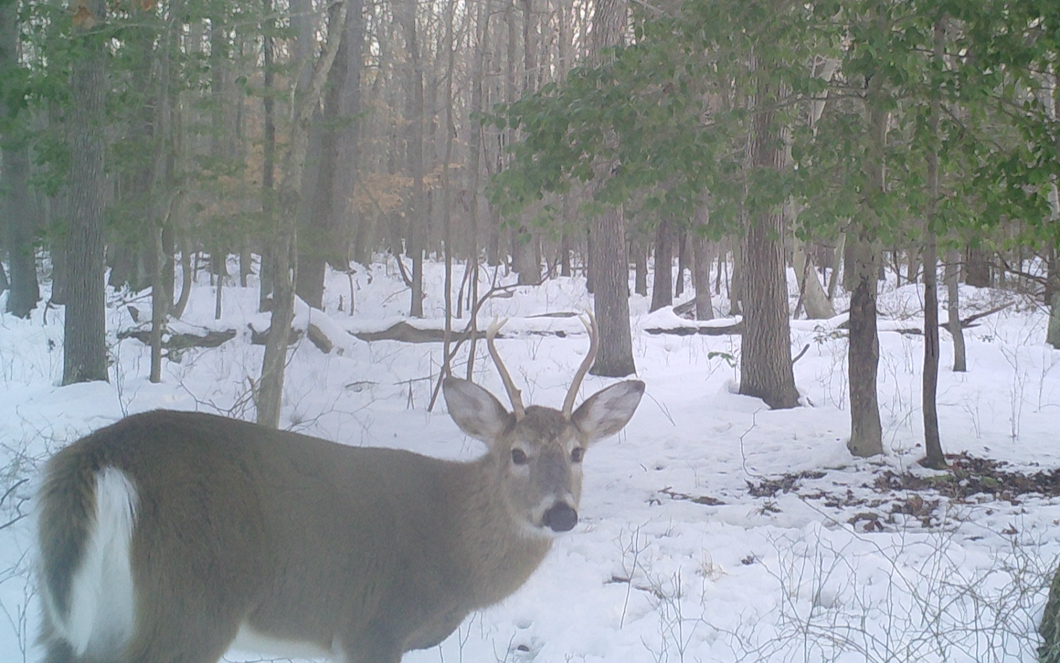
What about calcium and phosphorus ratios in plants? Or the distribution of Indian cucumber root?
And then there is all the fawn research – understanding birth synchrony has no application to management. But someday it might be the key to a problem we have yet to encounter.
All this to say, basic science has value. It is the seed that grows into beautiful flowers making the world and our lives better. Investing in science research is investing in our future. A future that is not known. So we better learn as much as we can to be ready for it.
-Jeannine Fleegle
Wildlife Biologist
PA Game Commission
*If you are a first-time commenter on the blog, your post will not appear until it has been approved by the moderator. This is to prevent spam overwhelming us. If you do not see your post within 24 hours, please email us at deerforeststudy@gmail.com